The fastest early-game money in DDS2 comes from delivery grinding and territory expansion, not cooking. I tried going straight to cooking and ended up broke with wasted materials. In the first 10 hours, deliveries outperform cooking by roughly 3:1 based on what I have seen and what the community confirms. This guide covers the three phases of early money-making, from zero to a sustainable operation.
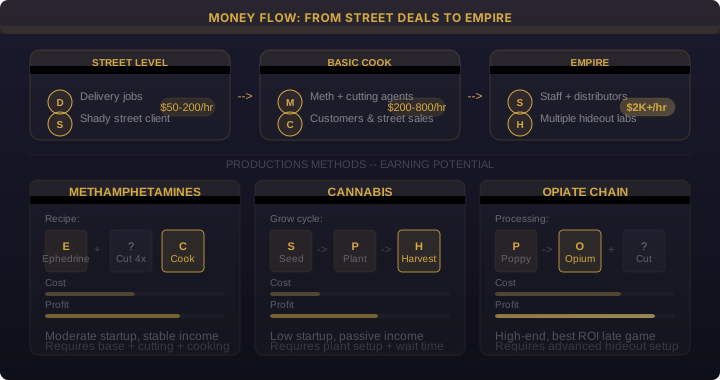
Phase 1: Delivery economy ($0 to $2,000):
Your first $2,000 should come from ShadyComm deliveries. Per the Steam quick-start guide: "Police hours bring extra cash, so try to keep moving those drugs. The faster you deliver, the faster they re-order."
| Method | Payout per Job | Time | Notes |
|---|---|---|---|
| Local deliveries | $80-150 | 5-8 minutes | Safest option, low police risk |
| Cross-zone deliveries | $150-300 | 10-15 minutes | Higher risk, more police patrols |
| Police hours (peak) | +25% bonus | Variable | Higher payout window during increased patrols |
Practical example: Optimizing your delivery route
Here is the delivery strategy I use that maximizes earnings per hour:
- Open ShadyComm and accept all jobs in your current zone (usually 3-5 orders)
- Sort them by distance using the map -- plot a circular route starting with the closest
- Complete all orders in one run before returning to reload
- Each job takes 5-8 minutes and pays $80-150
- A full route pays $300-600 per 20-30 minute loop
- Repeat until you reach $2,000
The key insight: do not accept jobs outside your current zone until you have a vehicle. Walking across zone boundaries takes too long and the extra payout does not compensate for the travel time. Focus on building a dense client base in one territory before expanding.
Phase 2: First cooking setup ($2,000 to $8,000):
At $2,000, invest in a basic lab kit ($800) and find the first recipe card (located in the tutorial zone warehouse). The DDS2 FAQ guide confirms cooking becomes viable once you have the recipe and ingredients.
| Ingredient Type | Source | Cost |
|---|---|---|
| Precursor chemicals | Pharmacies | Low |
| Solvents and ammonia | Farm supply stores | Low-Medium |
| Basic equipment | Hardware stores | $800-1,500 |
| Recipe card | Tutorial zone warehouse (specific location) | Free (find it) |
Phase 3: Expand territory ($8,000+):
After $8,000, shift from survival to scaling. Each territory has its own client base, police density, and supply sources. Choosing the right territory for your stage matters.
| Territory Type | Cost to Access | Best For |
|---|---|---|
| Starting village | Free | Early game deliveries, low police presence |
| Rural/farm areas | $1,500-4,500 | Raw material sourcing, low heat operations |
| Industrial zones | $5,000-12,000 | Large-scale processing, higher capacity |
| Downtown/coastal | $10,000+ | High-value client base, more police risk |
Comparison of early income methods:
| Method | Hourly Income | Risk Level | Equipment Needed |
|---|---|---|---|
| ShadyComm deliveries | $800-1,200 | Low | None (phone required) |
| Basic cooking + selling | $400-600 | Medium | Lab kit ($800 + ingredients) |
| Territory delivery loops | $1,200-2,000 | Medium | Second hideout, bike |
| Influencer missions | Variable | Medium-High | Story progression |
| Notice board tasks | $200-500 per task | Low | None |
Key early-game buying priorities:
| Priority | Item | Cost | Why |
|---|---|---|---|
| 1 | Second hideout | $1,500-4,500 | Raid protection, split risk |
| 2 | Bike | $400 | 3x faster than running between deliveries |
| 3 | Better backpack | $250 | Doubles carry capacity per run |
| 4 | Lockpick kit (tier 2) | $150 | Access better loot spots for free supplies |
| 5 | Distributor desk materials | ~$2,000 | Unlocks employee system and passive income |
Related Guides:
- Empire Guide -- Scaling past $50k with staff and multi-hideout strategy
- Getting Started Guide -- First hour on Isla Sombra
- 10 Common Mistakes -- Money pitfalls new players should avoid
- Meth Cooking Guide -- Step-by-step first cook after you have capital
Community Verification & Resources
Data values may shift with patches. Cross-check against community resources before building your strategy.